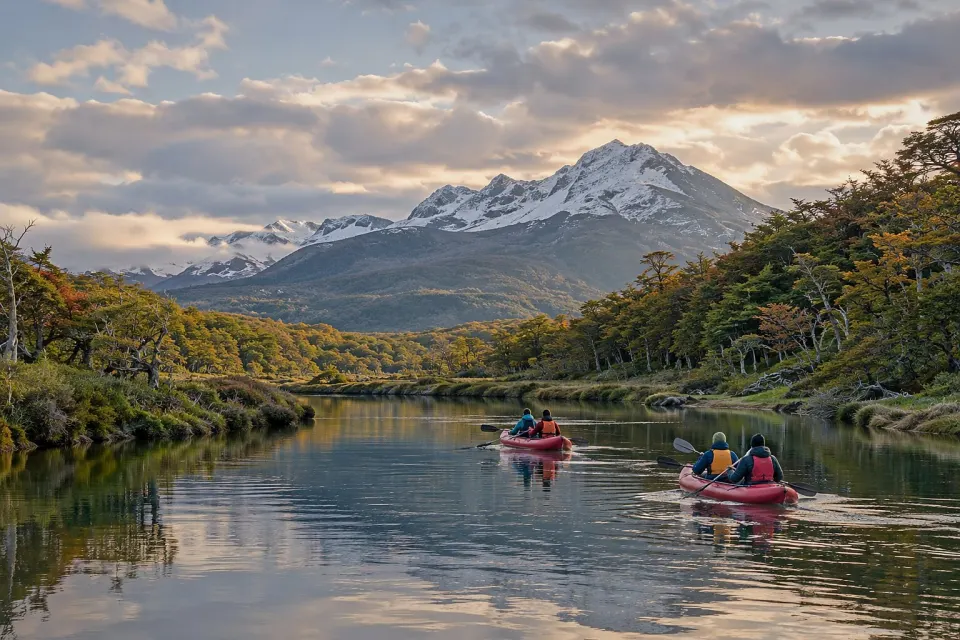
Tierra del Fuego National Park: Hike and Canoe
The Coastal Trail on foot and canoes to Lapataia Bay, with lunch.
- 8 hours
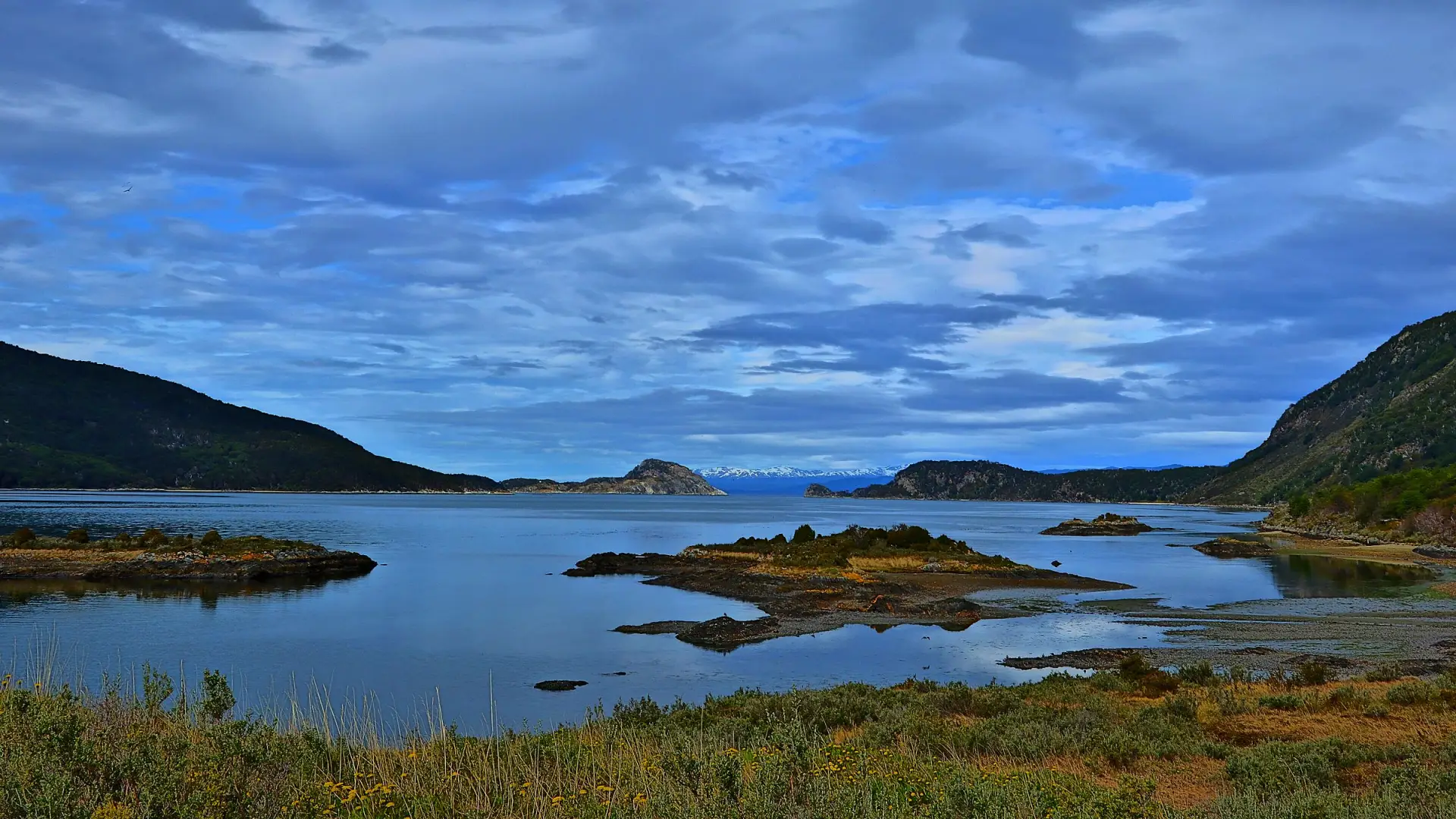
Tierra del Fuego National Park lies about 12 km west of Ushuaia and protects more than 68,000 hectares of Patagonian forest. Our tours visit Lapataia Bay, where National Route 3 and the iconic Pan-American Highway end, Lake Acigami (Roca) and Ensenada Zaratiegui Bay.
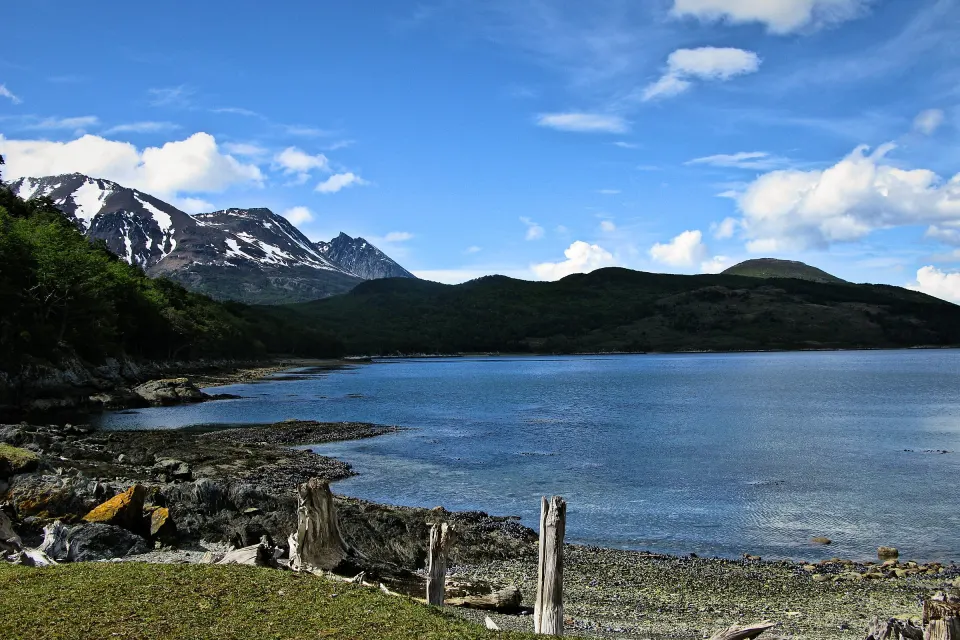
Tierra del Fuego National Park lies about 12 km west of Ushuaia and was created in 1960. It protects more than 68,000 hectares of the Patagonian Forests ecoregion, on the Beagle Channel. The National Park protects native wildlife, such as the red fox, the guanaco and the Magellanic woodpecker, the archaeological sites of the Yaghan, the native people of southern Tierra del Fuego, and large expanses of peat bogs, lakes and rivers.
The park’s flora stands out for more than 60,000 hectares of sub-Antarctic Nothofagus forest. Its main species are lenga, ñire and guindo (Magellan’s beech). Large peat bogs, now protected, also stretch across several parts of the park.
Notable wildlife includes the Fuegian red fox, native to the island, the guanaco, the woodpecker and, in the mountains, the Andean condor.
The beaver is an introduced species that causes problems in the protected area.
With half a day, the classic tour (about 4 hours): Ensenada Zaratiegui Bay, Lake Acigami (Roca) and Lapataia Bay, admission included. If you want to add the train, the tour with the End of the World Train (about 6 hours), which adds the train ride and also stops at Ensenada Zaratiegui. To hike and paddle all day, the hike and canoe tour (about 8 hours, lunch included). The full comparison, with a table, is in which National Park tour to choose.
Admission fees and opening hours are on the official National Parks website. Admission is included in the classic and train tours, but not in the hike and canoe tour. If you go to the train on your own, keep in mind that the train ticket does not include park admission, which is mandatory. All three tours pick you up from your accommodation in Ushuaia; on the classic and train tours, the meeting time is around 8:00 / 8:30.
The Beagle Channel that the Coastal Trail follows can also be explored by boat from the port of Ushuaia: islands, a lighthouse and penguins in Beagle Channel. To combine the park with other outings on your trip, see Ushuaia in 3 or 4 days.
About 12 km west of Ushuaia. All three park tours pick you up from your accommodation in the city.
The classic tour and the tour with the End of the World Train. The hike and canoe tour does not include admission.
Yes: it runs through the park’s forests and valleys. The train tour includes the classic train ticket and park admission; the premium ticket is not included.
Only the hike and canoe tour: lunch with drinks out in nature, with a vegetarian and gluten-free menu. The classic and train tours do not include lunch.
It is the end point of National Route 3, which starts in Buenos Aires, and of the Pan-American Highway. Here you find archaeological sites known as “concheros” (shell middens), traces of the first inhabitants. All three park tours get there.
On the official website of Argentina’s National Parks Administration (argentina.gob.ar/parquesnacionales/tierradelfuego).
Among others, the Fuegian red fox, native to the island, the guanaco, the Magellanic woodpecker and, in the mountains, the Andean condor. The beaver is an introduced species.
The hike and canoe tour: 7 km on foot along the Coastal Trail. The classic tour adds a hike at Ensenada Zaratiegui Bay, adapted to the day’s conditions, and a walk among the shell middens at Lapataia Bay. On the train tour, the program does not mention a walk.
The Coastal Trail on foot and canoes to Lapataia Bay, with lunch.
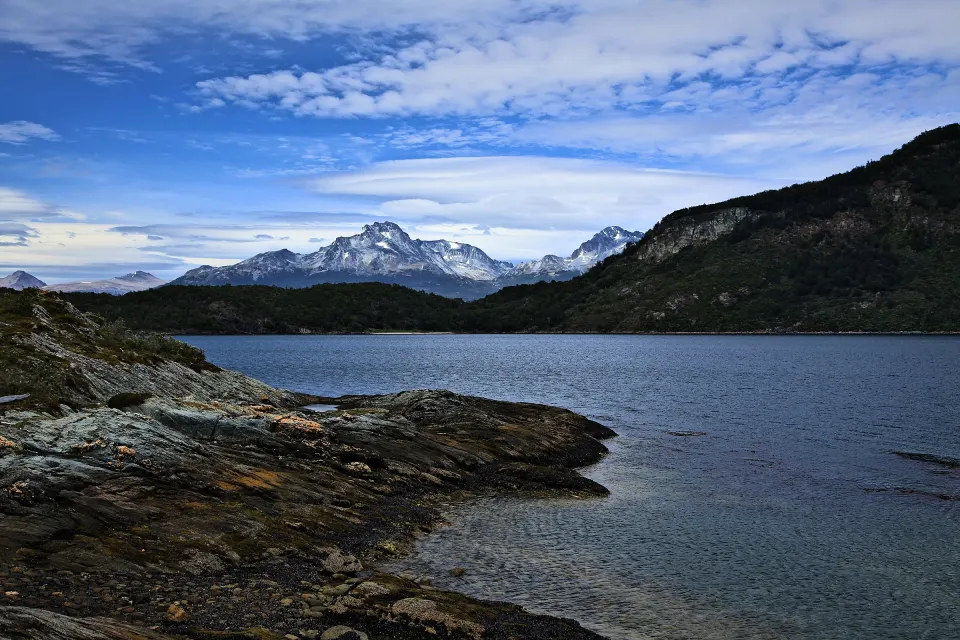
Forest, lake and sea in half a day, with park admission included.
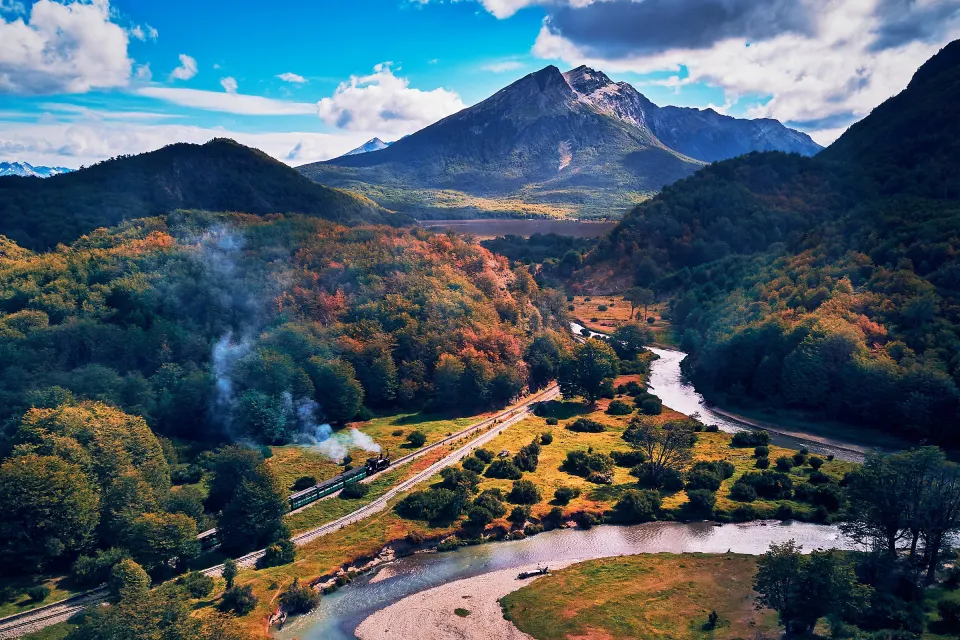
The world’s southernmost railway and the National Park, entry included.
Its route, the prisoners’ train history and how to get there from Ushuaia.
Classic, with the train or hike and canoe: comparison and which to pick.
