Beaver Watching with Dinner
Garibaldi Pass, beaver dams and a three-course dinner, in the afternoon.
- 6–7 hours
- Easy
The beavers of Tierra del Fuego are an invasive species: the North American beaver (Castor canadensis) was brought from Canada in 1946 to produce fur. With no natural predators, it has colonized almost every river on the island, flooding and felling lenga forests and damaging peat bogs. Argentina and Chile signed an agreement to control it.
The Argentine government, in 1946. Beavers were brought from Canada to create a wild population for the fur industry, and they were released in the area of Lake Fagnano (Khami), on the Claro River, northeast of the lake.
The fur business never took off, but the beavers did. Once that industry was abandoned, no one kept controlling the population, and they multiplied very quickly: in Tierra del Fuego they have no natural predators, like the bears of Canada, and they found plenty of resources.
By 1960 beavers had already reached Tierra del Fuego National Park, where they now occupy much of its area, and they later moved into the Chilean side of the island and almost every river on Navarino Island. Today they occupy the whole of Isla Grande de Tierra del Fuego, other Chilean islands, islets in the Beagle Channel and parts of mainland Chile, because they crossed the Strait of Magellan. If they are not controlled, they could advance north along the Patagonian Andes, at least as far as Neuquén.
Beavers change the landscape in two ways: they cut down trees and, with their dams, they flood the forest. They affect lenga, guindo and ñire forests, and a damaged lenga takes about 200 years to recover. The damage lasts so long because, unlike many North American trees, those in the south of the continent do not usually resprout when they are cut.
Ecologist Christopher Anderson, of the University of Magallanes, summed it up this way: it is the largest change to the region’s forest landscape in about 10,000 years.
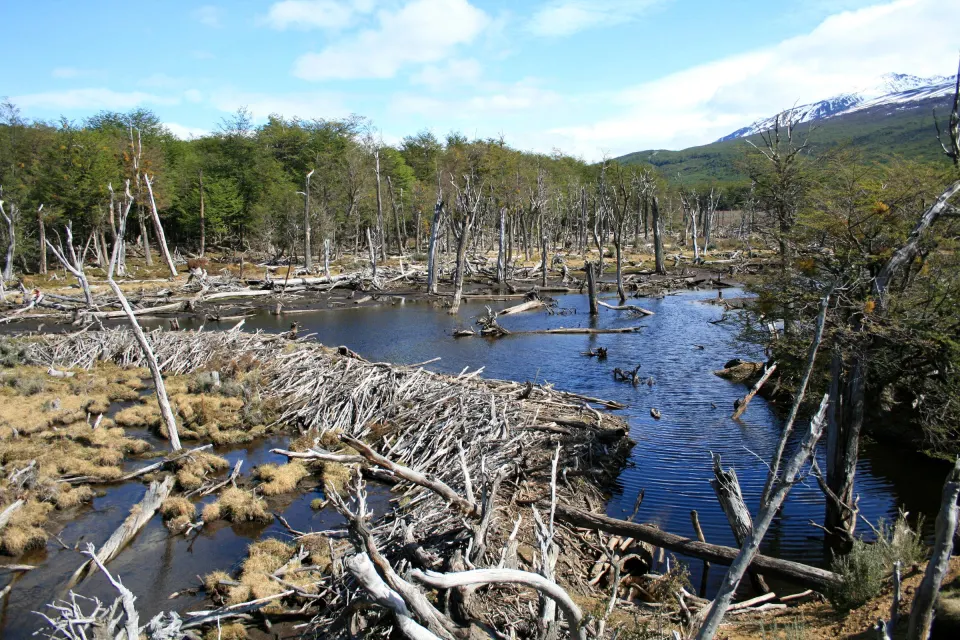
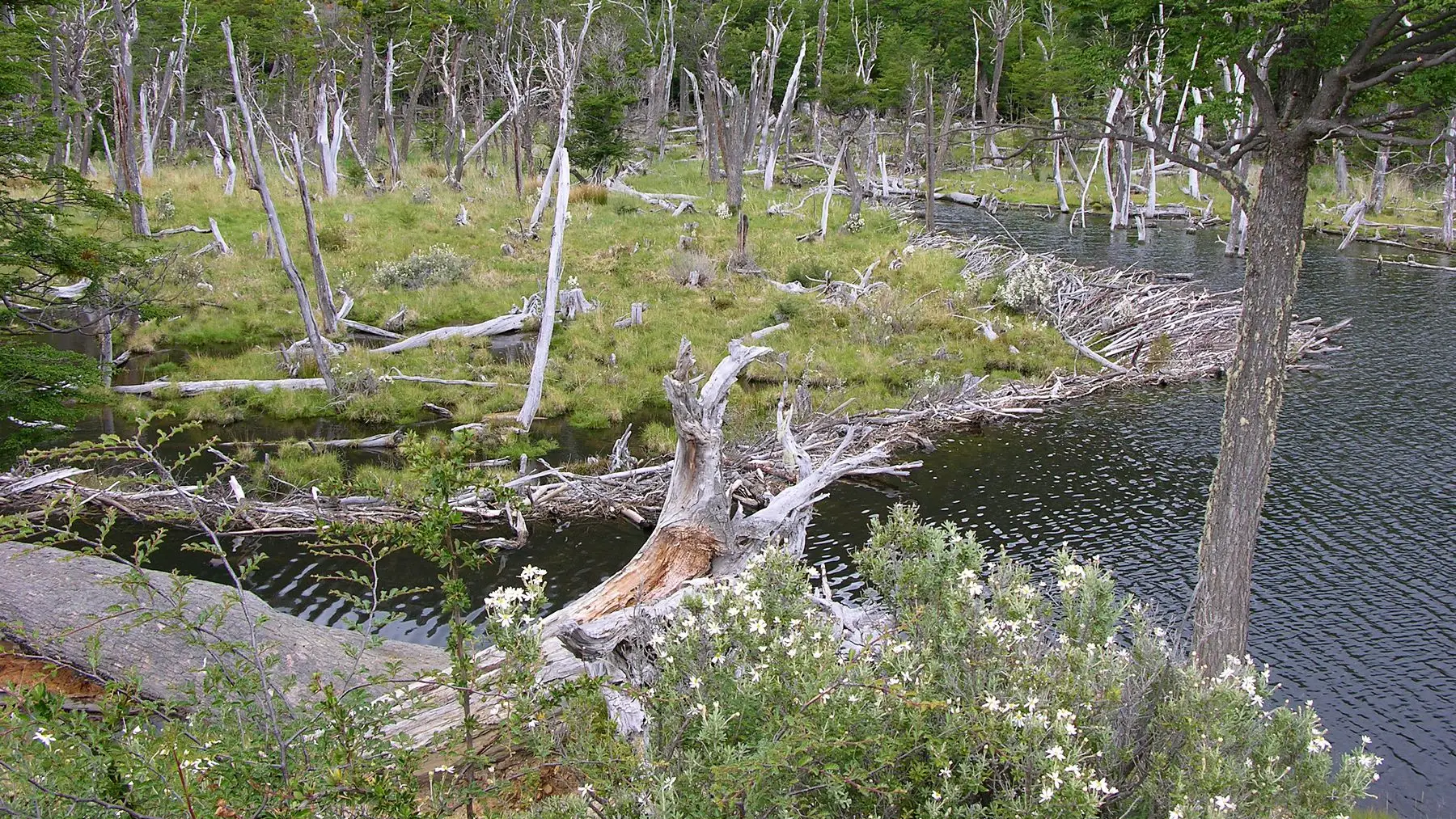
That is the local name for the structures beavers build with logs in rivers and streams. The beaver lives in lodges on the banks of rivers and lakes, about 4 m across and 1.5 m high, and around them it builds dams with logs and branches, sealed with leaves, mud and stones. It can cut trunks up to 30 cm in diameter with its incisors, and in the fall it fells trees and shrubs and stores them underwater for the winter. In the forests of Tierra del Fuego it feeds mainly on lenga and ñire.
The result is easy to recognize: the dammed water and, around it, the flooded forest with dead trees still standing, like the ones in this guide’s photo.
Seeing the animal is hard: the beaver is nocturnal, lives in groups and spends a lot of time in the water. What you can see by day, and in many places, are its dams. To look for them we have a dedicated tour, beaver watching with dinner: it leaves at 4:30 p.m. and, at Estancia La Carmen, takes a guided interpretive walk of about 20 minutes to the beaver dams and their lodges. On our other tours, what the programs list are the beaver dams.
| Tour | What the program says | What it is like |
|---|---|---|
| Beaver watching with dinner | A guided interpretive walk of about 20 min to beaver dams and lodges at Estancia La Carmen | Leaves at 4:30 p.m., crosses Garibaldi Pass and explores the forests and lakes around Lake Escondido; about 6 to 7 h, easy, 3-course dinner |
| Laguna Esmeralda hike | Virgin forest with beaver dams on the streams, before the peat bogs | 9 km round trip, about 4 to 5 h, medium difficulty, ages 12 to 60 |
| King Crab Route to Puerto Almanza | Beaver dams along the way, among forests, lagoons and coastal viewpoints | About 8 h, with a walk to the Duende Waterfall |
| Hike and canoe in the National Park | It does not mention beaver dams: the Coastal Trail, lunch and canoes to Lapataia Bay | 7 km on foot and a canoe section, about 8 h |
On the Laguna Esmeralda hike, the beaver dams appear on the first section, among lenga trees. Waterproof footwear that covers the ankle is mandatory there: the ground is sometimes boggy, with roots and peat. Lake Fagnano, where it all began, can be seen in the distance from the Garibaldi Pass viewpoint, on the way to Estancia La Carmen: more about the area in Garibaldi Pass and Lake Escondido.
Tierra del Fuego National Park also has beavers: they are among its exotic species, with a very significant negative impact on the environment, and the park has a trail called Castorera Turística, suitable for people with reduced mobility. Our hike and canoe tour does not include that trail in its program.
Garibaldi Pass, beaver dams and a three-course dinner, in the afternoon.
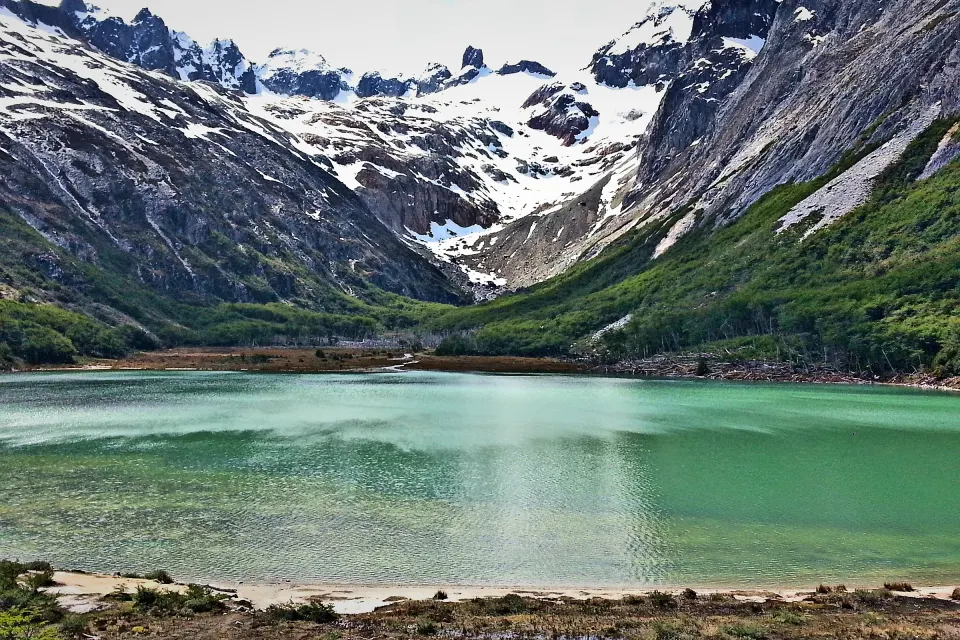
Forest, peat bogs and a turquoise lagoon: 9 km with a guide and lunch.
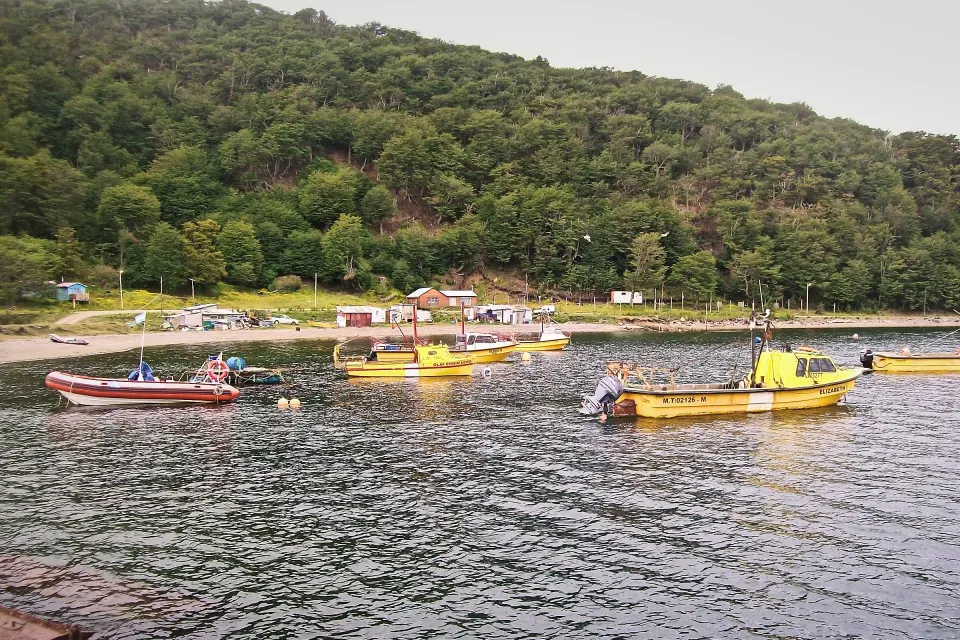
A tour to Puerto Almanza, with lunch facing the Beagle Channel.
Argentina signed a Binational Agreement with Chile to stop the beaver from spreading to the mainland, control its populations and restore damaged ecosystems. Under the ENEEI project, work was carried out in eight pilot areas in the Argentine sector of Isla Grande, with intensive beaver removal to restore those habitats.
The journal Nature described it as the largest eradication project ever attempted. Sport hunting was not enough, because the pelts have little value on the local market, and that, culturally, the beaver is seen more as a likeable, dam-building herbivore than as an invader.
What the trail is like, how far you walk and what to bring are in Laguna Esmeralda and in the guide to hiking in Ushuaia. For the park, see Tierra del Fuego National Park. And if you are taking the King Crab Route, king crab in Ushuaia explains what it is and where to try it.
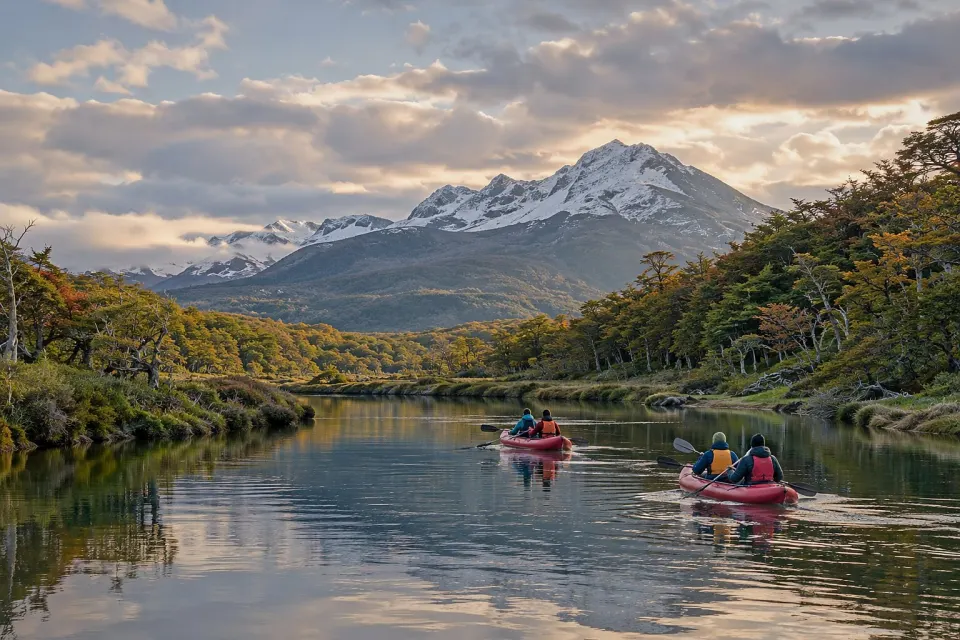
The Coastal Trail on foot and canoes to Lapataia Bay, with lunch.
The Argentine government, in 1946. It brought them from Canada and released them in the Lake Fagnano area to create a fur industry, which never took off.
Because they have no natural predators on the island and they change the landscape: they cut down trees and flood the forest with their dams. A damaged lenga takes about 200 years to recover, and they also affect peat bogs.
Yes. They reached the park in 1960, now occupy much of its area and are among the protected area’s exotic species.
The structure beavers build with logs in rivers and streams: a dam that holds back the water and, on the bank, their lodge. You can recognize it by the dammed water and the trees killed by the flooding.
You see beaver dams in the forest, before the peat bogs. The animal is hard to spot because it is nocturnal, so we do not promise sightings.
Yes: beaver watching with dinner, of about 6 to 7 hours. It includes a guided interpretive walk of about 20 minutes to the beaver dams at Estancia La Carmen and a 3-course dinner.
Argentina and Chile signed a binational agreement to stop their spread, control their populations and restore the habitats. In the Argentine sector there were eight pilot areas with intensive beaver removal.
