King Crab Route · Puerto Almanza
A tour to Puerto Almanza, with lunch facing the Beagle Channel.
- 8 hours
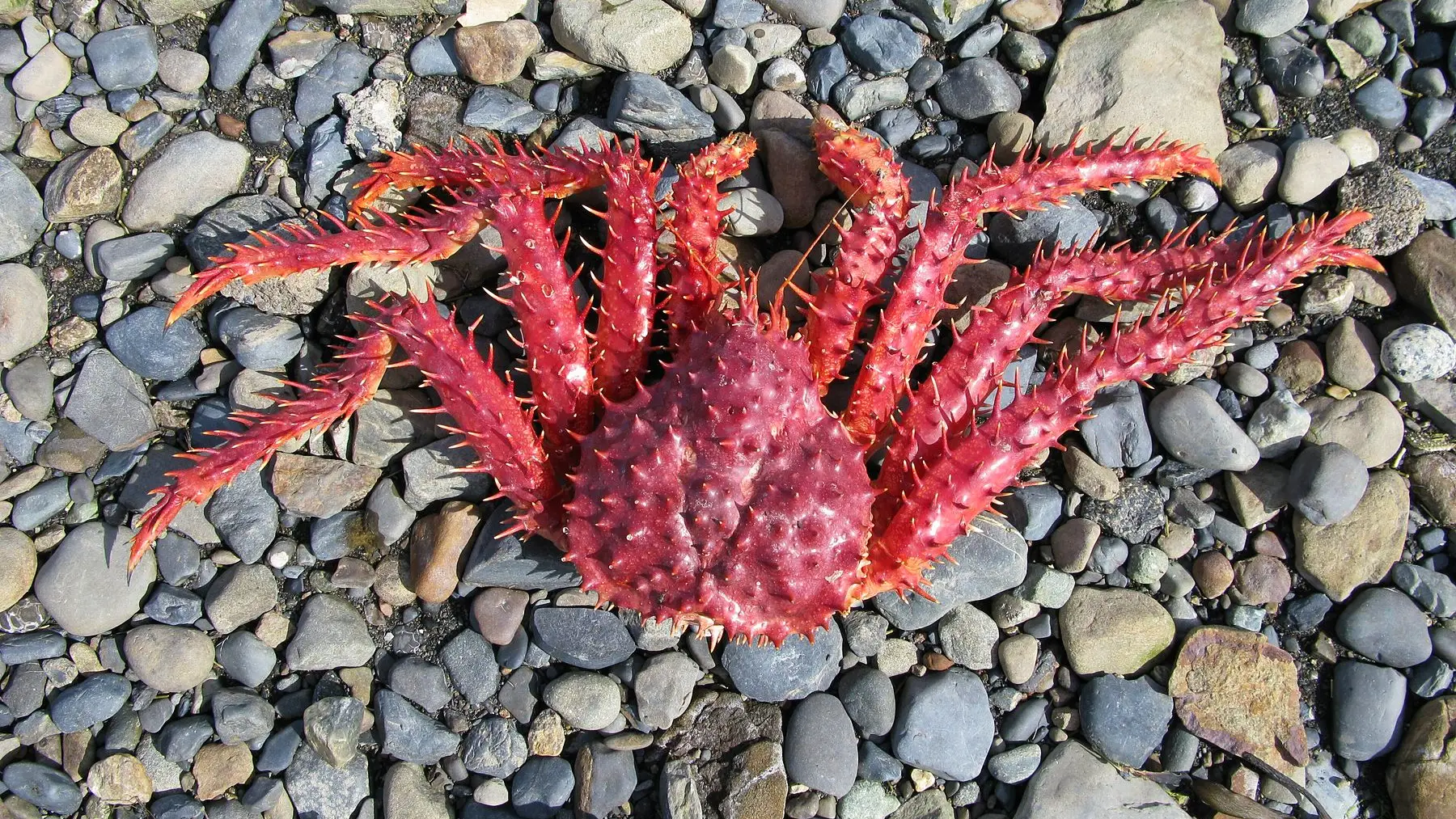
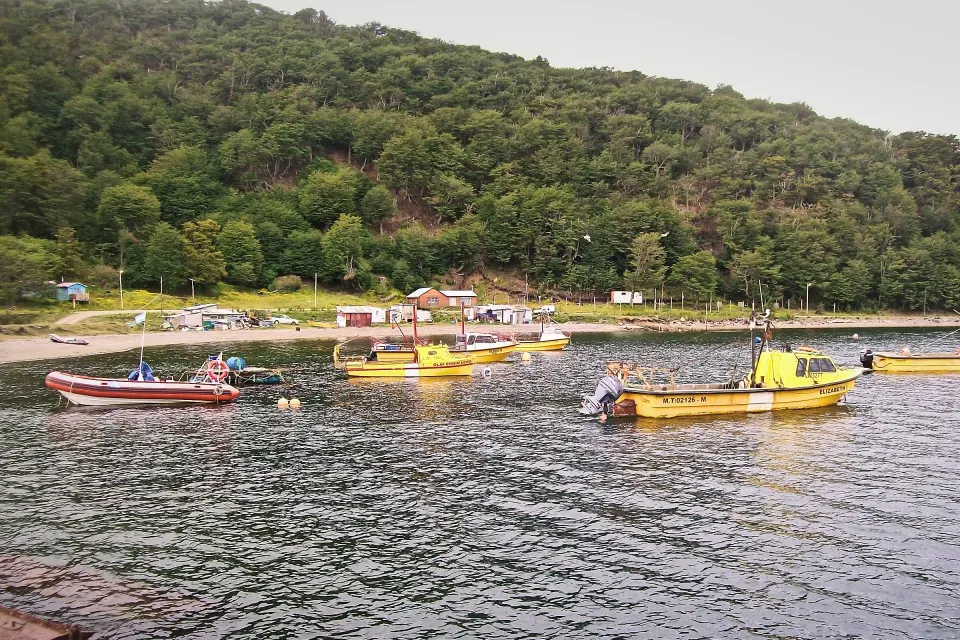
Southern king crab, or centolla (Lithodes santolla), is a cold-water crustacean that a small-scale fleet catches in the Beagle Channel with bottom traps. Fishing for it is closed from March 1 to June 30. You can eat it at restaurants in Ushuaia and in Puerto Almanza, the fishing village on the channel.
The southern king crab, known locally as centolla (Lithodes santolla), is a crustacean that lives on the seabed in the cold waters of southern South America. It is also called Magellanic, southern, Argentine or Chilean king crab, and it generally lives at depths of less than 150 m. It is a decapod of the family Lithodidae: its carapace reaches about 19 cm in length, but its long legs make it look much bigger, and its color ranges from orange-red to pink.
At first glance it looks like a crab: it has six legs, two claws, a reddish color and an average weight of about two kilos. In English it is known as king crab and, along with Patagonian toothfish (merluza negra), it is one of the city’s signature dishes.
Two similar species are caught in the Beagle Channel, and both may appear on a menu. Both grow slowly: the centolla reaches reproductive age at about 5 years, and the centollón at 10.
| Detail | Centolla | Centollón |
|---|---|---|
| Scientific name | Lithodes santolla | Paralomis granulosa |
| Other names | Magellanic, southern, Argentine or Chilean king crab | Magellanic or southern centollón, false king crab |
| Size | Carapace about 19 cm long | Medium-sized: carapace up to 115 mm and weight up to 1.5 kg |
| Reproductive age | About 5 years | About 10 years |
If you want to know what you are being served at a restaurant, ask whether the dish is made with centolla or centollón.
With bottom traps, from a small-scale fishing fleet. In Puerto Almanza there are about 30 houses, most of them belonging to small-scale fishers who take centolla, centollón, mussels, ribbed mussels and other shellfish from the channel.
The fishery has a history, and limits too. In August 1967, a Chilean patrol boat ordered the Argentine schooner Cruz del Sur, which was fishing for king crab near Gable Island, to leave: it was one of the episodes that heightened the Beagle conflict in the 1970s. The king crab population declined drastically because of commercial fishing, which is why the closed season matters.
The species’ life cycle helps explain why. Females molt their shells between late November and early December, each one carries between 5,500 and 60,000 eggs attached to her body, and development inside the egg takes 9 to 10 months: the young hatch between mid-September and October.
To protect the resource, king crab fishing is banned from March 1 to June 30 every year. It is also sold frozen, canned smoked or in olive oil, with the Tierra del Fuego – Fin del Mundo Certified Quality Seal. If you are traveling in those months and want freshly caught king crab, ask the restaurant how it is stored. To choose when to travel, see when to visit Ushuaia.
In the city and on the channel coast. Local cooks prepare it in salads, stews, stuffed pasta, gratins, soups, sushi and empanadas, and on its own. It is a lean meat: every 100 g of cooked king crab has between 0.7 and 0.76 g of fat and between 14 and 16 g of protein. There are also restaurants in Puerto Almanza, and it is best to book ahead.
We do not name restaurants or prices, because they change: before you go, check each restaurant’s menu.
It is the place that gives the King Crab Route its name. It is 75 km from Ushuaia, facing Puerto Williams (Chile), and its visitors can eat dishes made with the day’s catch and harvest: fish, centolla and centollón, sea urchin, octopus and shellfish. There are also outings to catch your own king crab from Puerto Almanza; Caravana does not offer that activity. What else there is in the village and how to get there is in Puerto Almanza.
We cannot promise it. The tour goes to Puerto Almanza in about 8 hours, with stops at Laguna Victoria (country breakfast), Brown Bay, Puerto Almanza, lunch facing the Beagle Channel, the Duende Waterfall and the Flag Tree. Lunch is included, but the program does not list the menu. If trying king crab is part of your plan, ask when you check availability, or book a meal in Ushuaia for another point in your trip.
Along the way you also see castoreras, the dams built by beavers: their story is in beavers in Tierra del Fuego.
A tour to Puerto Almanza, with lunch facing the Beagle Channel.
If the King Crab Route takes up a whole day, the rest of your trip falls into place with what to do in Ushuaia in 3 or 4 days. To see the channel from the water, with islands, a lighthouse and penguins, see the Beagle Channel.
A cold-water crustacean from southern South America (Lithodes santolla), reddish in color and with an average weight of about two kilos. In the Beagle Channel, a small-scale fleet catches it with bottom traps.
They are two different species caught in the Beagle Channel. The centollón (Paralomis granulosa) is smaller: its carapace reaches 115 mm and its weight 1.5 kg. The centolla reproduces from age 5 and the centollón from age 10.
From March 1 to June 30 every year. King crab is not fished during that period; it is also sold frozen or canned.
At restaurants in the city and in Puerto Almanza. Check each restaurant’s menu and, in Puerto Almanza, book ahead.
Lunch facing the Beagle Channel is included, but the program does not list the menu or promise king crab. If you want to try it, ask when you check availability.
It depends on the place and the dish, and prices change. Check the restaurant’s menu before ordering.
